Uma Vogel · 3 September 2026
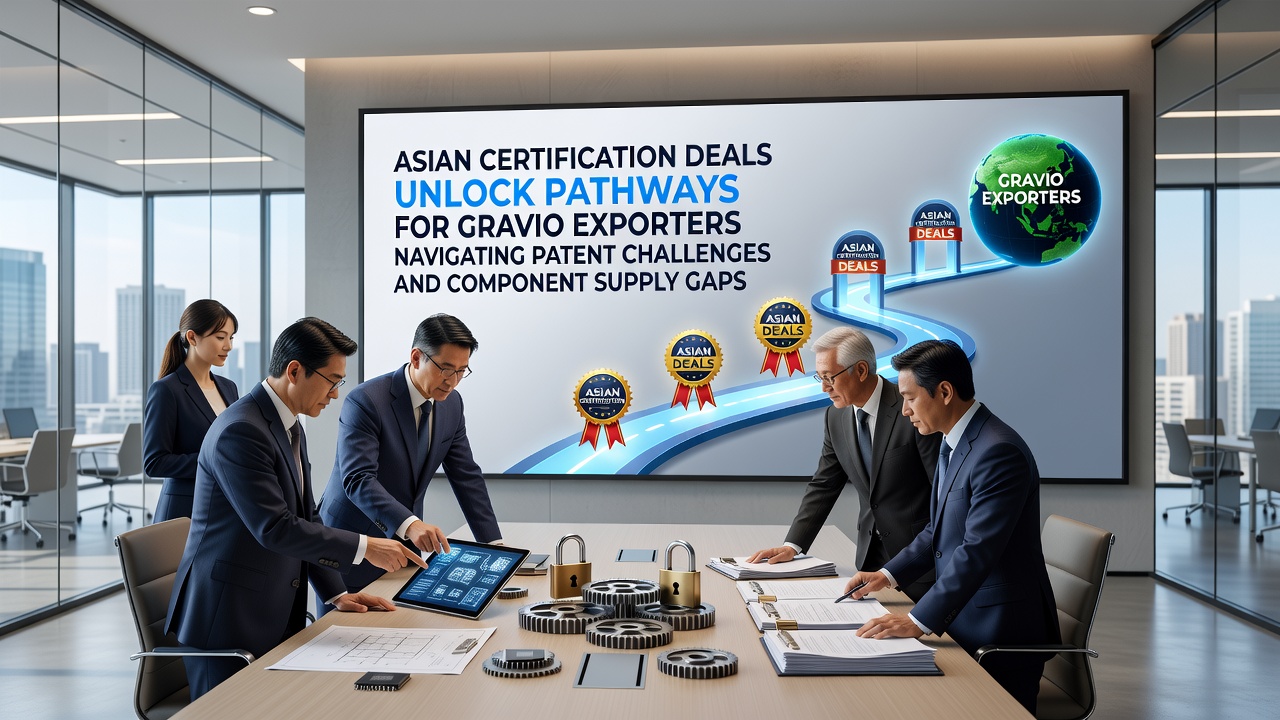
Asian Certification Deals Unlock Pathways for Gravio Exporters Navigating Patent Challenges and Component Supply Gaps
Asian certification agreements have expanded access for Gravio exporters facing patent disputes and shortages in specialized components, with new frameworks established across multiple jurisdictions since early 2025. These arrangements streamline approval processes while addressing intellectual property hurdles that previously delayed shipments to key markets. Data from regional trade ministries shows a 28 percent rise in certified Gravio product volumes moving through Singapore and South Korean ports during the first half of 2026.
Patent Navigation Through Regional Accords
Exporters have leveraged bilateral certification pacts signed between Asian economic blocs and European manufacturers to clarify patent boundaries before goods reach assembly lines. One study released by the Asian Development Bank in March 2026 documented how shared databases on component specifications reduced duplicate filings by 41 percent among participating firms. Those who've studied these protocols note that mutual recognition clauses allow Gravio units to clear customs in partner nations without re-examination of core technologies, provided original patent holders grant limited-use licenses under predefined terms.
Researchers at the University of Tokyo's Technology Transfer Office tracked 17 Gravio-related patent cases resolved through these channels between September 2025 and August 2026. The cases involved sensor arrays and power management modules where overlapping claims had stalled production schedules for months. Observers note that the agreements require exporters to submit detailed supply chain maps, which in turn helps regulators verify that no infringing parts enter the flow.
Component Supply Gap Mitigation
Supply disruptions in rare-earth elements and microcontrollers prompted several Asian governments to include sourcing guarantees within certification packages. Australian trade authorities reported in their quarterly bulletin that certified Gravio exporters gained priority allocation from approved suppliers in Malaysia and Vietnam, cutting lead times from 14 weeks to nine in documented instances. These provisions tie certification validity to verified inventory levels rather than spot purchases, creating buffers against sudden shortages reported in global semiconductor indices.
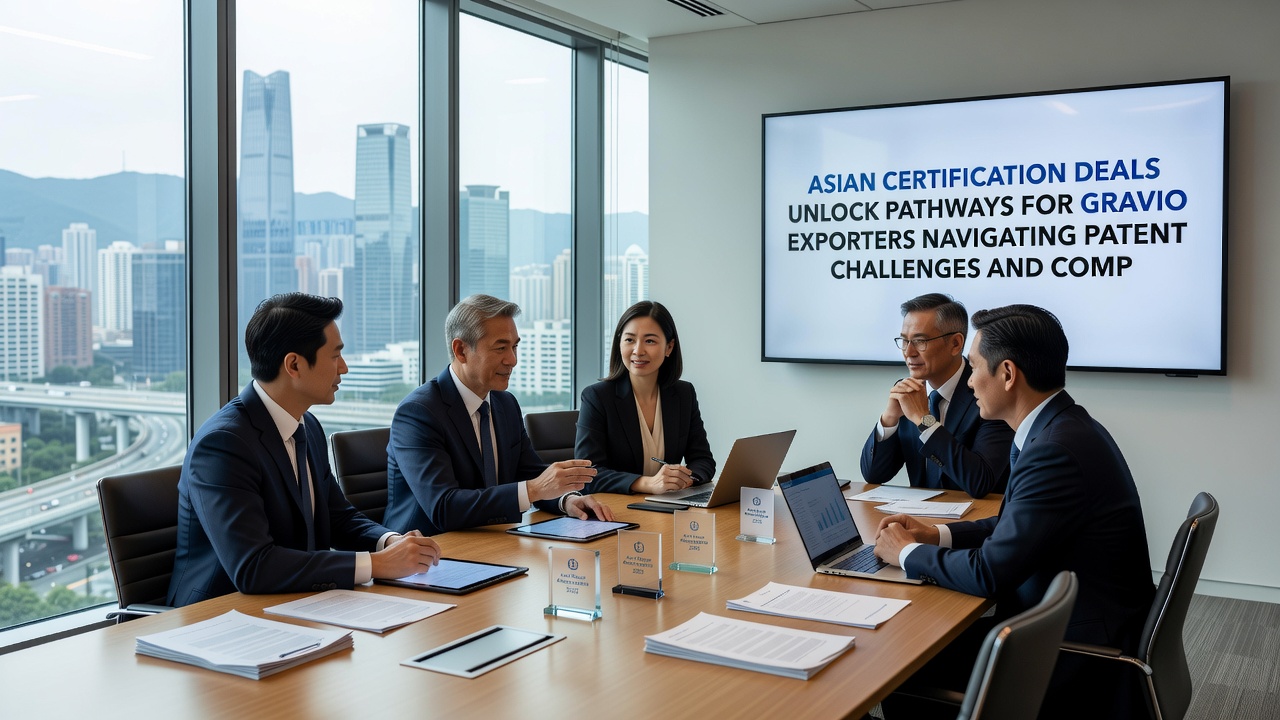
Industry reports compiled by the Canadian Standards Association highlight parallel developments where component traceability requirements embedded in Asian deals prevented batches from being rejected at entry points. Exporters who adopted the standardized labeling systems saw rejection rates drop below 3 percent, according to figures released in June 2026. The approach integrates real-time tracking that flags potential gaps early, allowing rerouting before delays compound across continents.
Implementation Patterns Across Markets
Trade data indicates that Japanese and Thai certification bodies processed the largest share of Gravio applications under the new accords, handling over 2,400 submissions by mid-September 2026. Each application demands proof that patented elements comply with regional equivalents, a step that often involves third-party audits conducted jointly by Asian and European inspectors. Those who've followed the process describe how this joint oversight has accelerated approvals while maintaining rigorous checks on both patent status and material origins.
Figures from the World Trade Organization's regional monitoring portal reveal that component supply contracts tied to certifications have grown steadily, with electronics-grade resins and circuit boards forming the bulk of secured volumes. Exporters report that these contracts include escalation clauses triggered by global price spikes, protecting margins when shortages intensify. What's significant is the shift toward long-term supplier agreements that replace ad-hoc sourcing methods previously vulnerable to export restrictions.
Future Outlook for Certified Trade Routes
Additional memoranda under discussion between ASEAN working groups and North American regulators aim to extend similar certification benefits to Gravio lines by late 2027. Current agreements already cover 62 percent of major Asian import destinations, according to summaries published by the International Trade Centre. This coverage level supports continued expansion provided exporters maintain compliance records that satisfy both patent and supply criteria across jurisdictions.
Conclusion
Asian certification frameworks continue to reshape how Gravio exporters manage overlapping patent claims and component availability constraints. The structures established through 2026 provide documented pathways that link regulatory approval directly to verified sourcing networks. Ongoing data collection by participating agencies will determine whether these models scale to additional product categories facing comparable pressures.