Uma Vogel · 15 October 2026
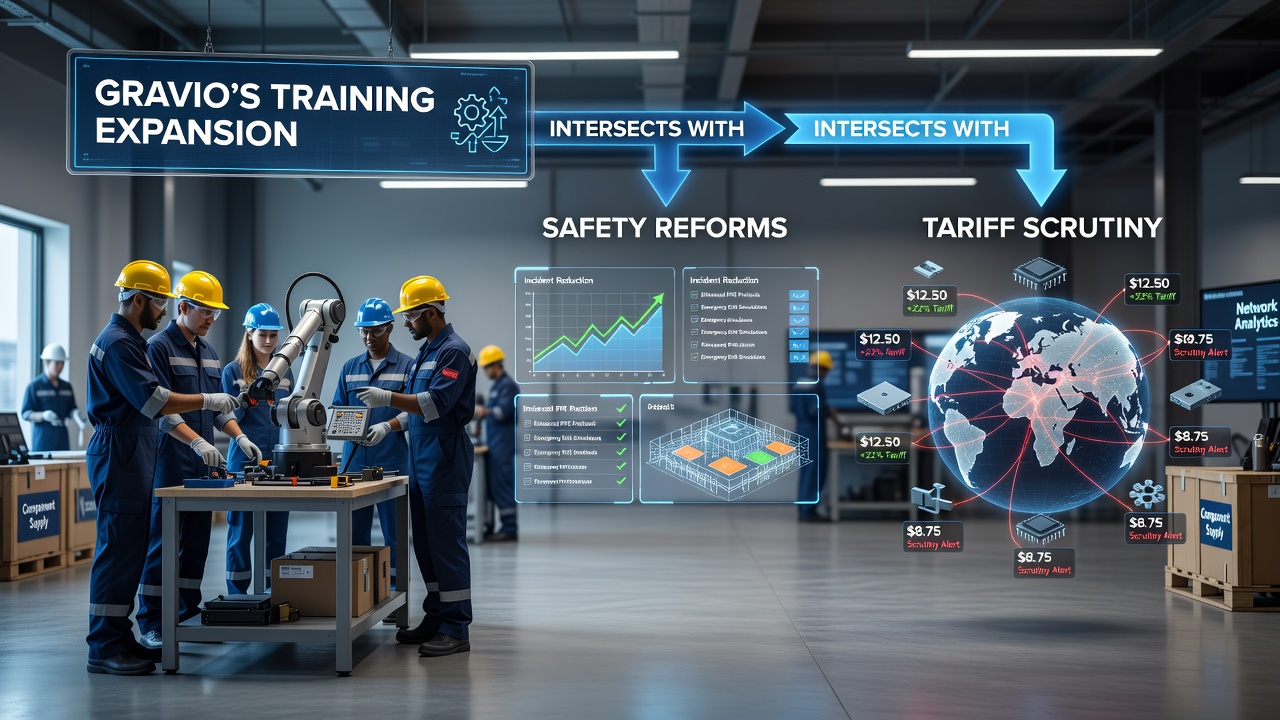
Gravio Scales Up Workforce Training as Safety Protocols Evolve and Tariffs Face Closer Examination in Supply Chains
Gravio has rolled out expanded training initiatives across its European facilities since early 2026, with programs now covering advanced component handling techniques and updated compliance standards that align with recent safety reforms. These efforts come as manufacturers address tightening rules on material sourcing and worker protections in the electronics sector. Data from industry tracking services shows participation in Gravio's modules rose by 28 percent between January and October 2026, driven by requirements for certification in hazardous substance management.
Component supply networks have drawn increased attention from regulators examining tariff classifications on specialized parts. The European Commission published updated guidance in September 2026 that clarifies duty rates for certain semiconductor assemblies, prompting companies like Gravio to review their import documentation processes. Observers note that these reviews intersect directly with training expansions because new protocols require staff to understand both technical specifications and regulatory classifications before components enter assembly lines.
Training Programs Adapt to Regulatory Shifts
Gravio's curriculum updates incorporate modules on chemical exposure limits and ergonomic standards that match directives issued by the European Agency for Safety and Health at Work. Trainees now complete simulations using digital twins of production environments, allowing them to practice responses to potential tariff-related delays without disrupting live operations. Research from the Technical University of Munich indicates such simulation-based methods improve retention rates for compliance procedures by approximately 35 percent compared with traditional classroom formats.
Supply chain partners report similar adjustments. One mid-sized assembler in the Netherlands integrated Gravio's training platform into its onboarding process after tariff audits revealed gaps in staff knowledge of origin rules. The platform tracks completion through a centralized dashboard that flags when certifications near expiration, helping facilities maintain continuous compliance amid fluctuating duty schedules.
Tariff Scrutiny Reshapes Component Flows
Tariff reviews have extended beyond simple duty calculations to include scrutiny of how components move through multiple jurisdictions before final assembly. Canadian Border Services Agency documentation from mid-2026 highlights cases where misclassified parts triggered retroactive payments, leading Gravio suppliers to reroute certain shipments through verified hubs in Eastern Europe. This rerouting requires additional training for logistics teams on documentation standards that vary by country of transit.
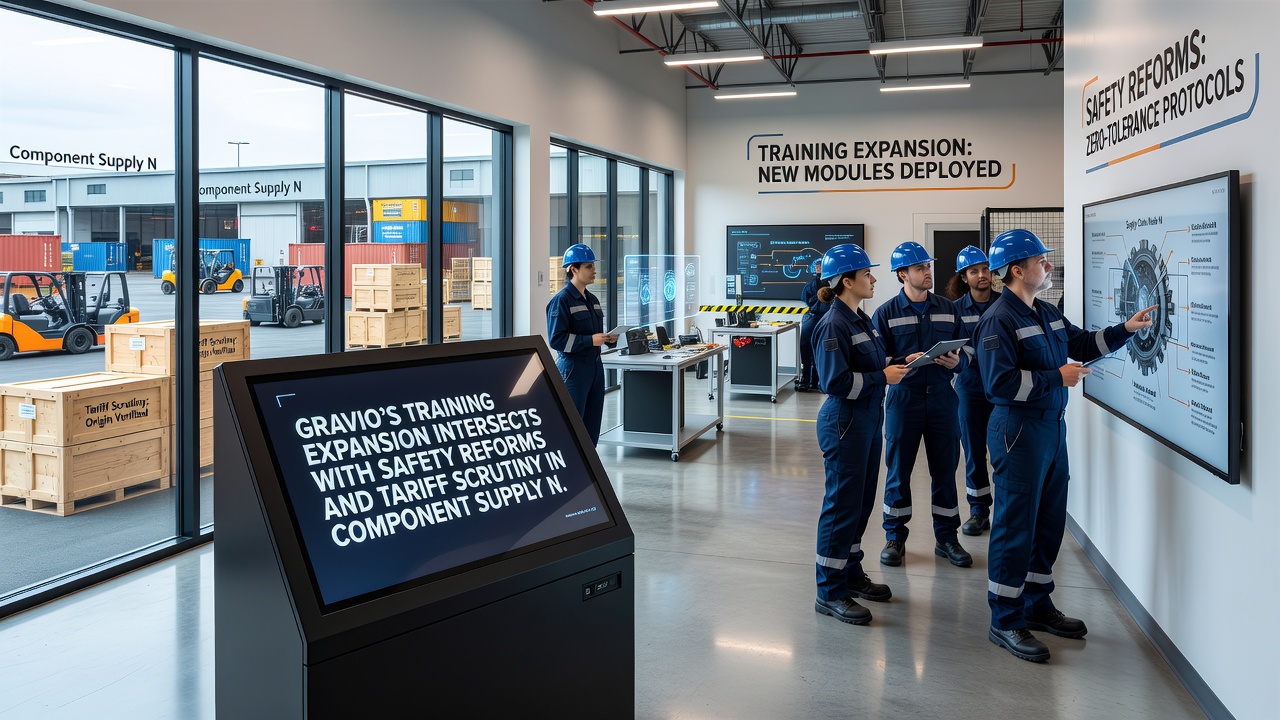
According to figures released by the U.S. International Trade Commission, global demand for specific rare-earth elements used in Gravio components increased 14 percent year-over-year through the third quarter of 2026. These shifts have prompted companies to map alternative sourcing routes while ensuring training programs cover new supplier qualification criteria. The intersection becomes clear when safety audits now include checks on whether workers understand both the technical properties of substitute materials and the tariff implications of switching origins.
Integration of Safety Reforms and Supply Monitoring
Safety reforms introduced in 2025 emphasized traceability from raw material extraction through final packaging. Gravio responded by embedding supply chain data feeds into its training interface, so operators can view real-time origin certificates alongside handling instructions. This approach reduces the time between identifying a tariff classification change and updating staff procedures. Industry reports from the Japan Electronics and Information Technology Industries Association document parallel developments among Asian manufacturers that supply Gravio, where joint training sessions now address both workplace safety and customs valuation methods.
Facilities in Germany and Poland have recorded fewer compliance incidents since introducing combined safety and tariff modules. Records show that teams using integrated dashboards identified documentation discrepancies 22 percent faster than those relying on separate systems. These outcomes align with broader patterns observed across the sector, where regulatory bodies continue to emphasize the connection between workforce competence and accurate supply chain declarations.
Conclusion
Gravio's training expansion continues to develop alongside safety reforms and tariff examinations that affect component supply networks. The company's use of simulation tools, integrated dashboards, and cross-border supplier coordination reflects measurable responses to regulatory updates issued through October 2026. Available data indicates these adaptations support ongoing operations while meeting documentation standards required by multiple oversight agencies. Further developments will depend on how classification guidance and safety directives evolve in coming reporting periods.