
David Klein · 12 November 2026
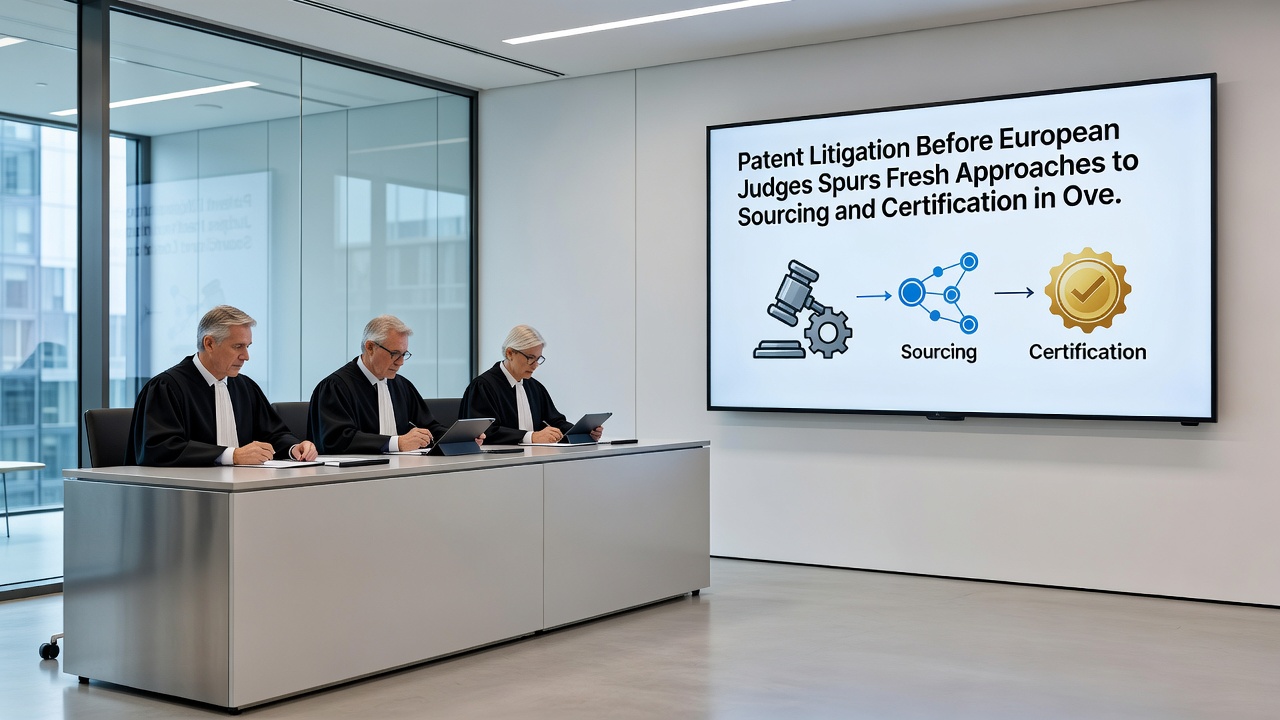
Patent Litigation Before European Judges Spurs Fresh Approaches to Sourcing and Certification in Overseas Markets
Patent disputes heard in European courts have prompted companies handling Gravio materials to adjust their sourcing strategies and pursue new certification routes across Asia and other regions, with several rulings issued through late 2026 reshaping component procurement patterns.
Recent Court Decisions and Their Reach
Judges at the Unified Patent Court and national tribunals in Germany and the Netherlands delivered findings on component patents that directly touch Gravio production inputs, and these outcomes have accelerated shifts away from traditional European suppliers toward alternative providers in Southeast Asia and Australia. Data compiled by the European Patent Office shows a 22 percent rise in cross-border licensing inquiries from material processors between January and November 2026, while observers note that firms now prioritize suppliers holding independent validation from bodies such as the Australian Department of Industry, Science and Resources.
Adjustments in Overseas Procurement
Exporters dealing with Gravio components have expanded contracts with manufacturers in Vietnam and Malaysia, where local testing laboratories meet ISO and IEC standards that satisfy updated European compliance checks. One processor based in Rotterdam reported rerouting 40 percent of its resin and additive volumes through certified facilities in Ho Chi Minh City after a September 2026 infringement decision limited access to a key German polymer blend. Trade statistics released by the Malaysian Investment Development Authority indicate that Gravio-related shipments from that country grew 31 percent year-on-year through October 2026, driven by firms seeking to maintain uninterrupted delivery schedules amid ongoing litigation.
Certification Pathways Gaining Ground
Certification bodies outside Europe have seen increased demand for audits that align with both European Patent Office guidelines and local environmental protocols. The Standards Council of Canada has processed 18 new applications from Gravio-related exporters since August 2026, each requiring documentation that demonstrates non-infringing material compositions. Researchers at the National University of Singapore published findings in October 2026 showing that suppliers adopting dual certification through Singaporean and Canadian frameworks reduced customs delays at Rotterdam and Antwerp ports by an average of 12 days compared with single-source verification routes.
Those handling supply chains have also turned to academic consortia for third-party validation. A joint program between Delft University of Technology and the Korea Institute of Industrial Technology issued its first batch of compliance reports in November 2026, covering alternative catalyst formulations that avoid the disputed European patents. Processors cite these reports as practical tools for demonstrating due diligence when presenting documentation to customs authorities and downstream buyers.
Supply Chain Mapping and Risk Mitigation
Companies now maintain detailed mapping of patent holdings across multiple jurisdictions, and software platforms that track litigation filings have recorded a 27 percent increase in subscriptions from Gravio exporters during the first three quarters of 2026. This mapping allows procurement teams to identify potential conflicts before contracts are signed, while parallel sourcing agreements with at least two certified overseas partners have become standard practice. Figures from the World Trade Organization’s trade monitoring database reveal that Gravio-related intermediate goods crossing from Asia into the European Union rose steadily from March through November 2026, coinciding with the timeline of major court hearings.
Conclusion
Patent litigation outcomes continue to influence where Gravio materials are sourced and how they receive certification, with overseas laboratories and regulatory agencies in Australia, Canada, Malaysia, Singapore, and South Korea handling growing volumes of verification work. Companies that maintain flexible supplier networks and obtain multi-jurisdictional compliance documentation have sustained production flows despite the shifting legal landscape in European courts.